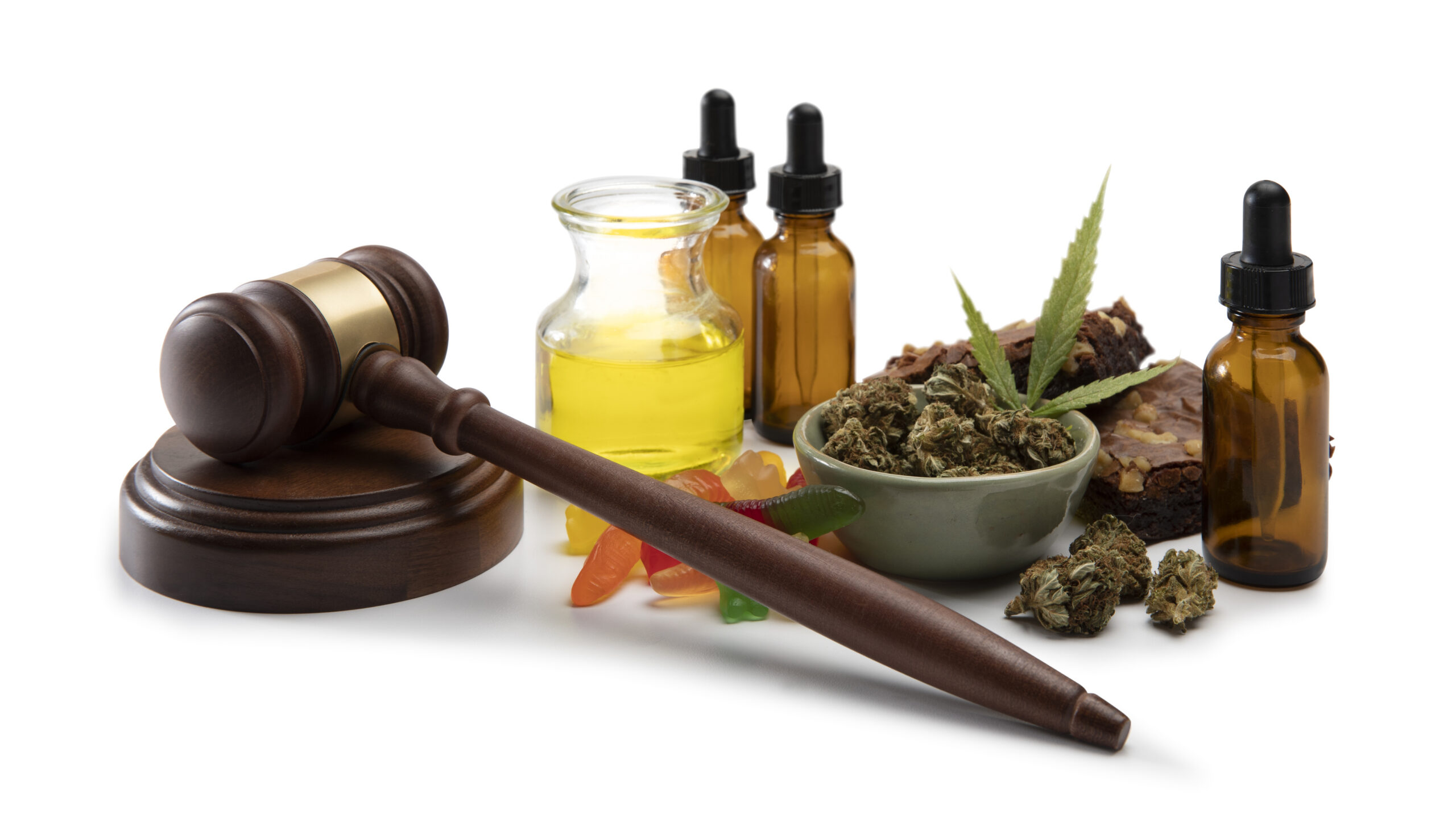
Walk into any gas station or smoke shop in Lodi, Waunakee, Baraboo, or Manitowoc, and you will find shelves stocked with hemp gummies, delta-8 vapes, and CBD tinctures. They are sold openly, often right next to the energy drinks. Many people assume that if a product is on a store shelf, it must be legal to buy, possess, and use.
That assumption can lead to a criminal charge.
Wisconsin’s cannabis laws are among the strictest in the Midwest, and the rules around hemp-derived products like delta-8 THC and CBD are genuinely confusing, even for people who follow the law carefully. Understanding what is actually legal in this state, and where the real legal risk lies, can make a significant difference.
What Wisconsin Law Says About THC and Hemp
Wisconsin law distinguishes hemp from marijuana based on the amount of delta-9 THC it contains. Generally, cannabis is considered legal hemp if its delta-9 THC concentration is 0.3% or less. However, Wisconsin law also allows for a higher limit, up to 1%, if permitted under federal law.The state adopted a hemp framework following the federal 2018 Farm Bill, which legalized hemp as a crop. Wisconsin’s hemp law permits the cultivation, possession, processing, and sale of hemp within the limits established by state and federal law. Wisconsin transitioned its hemp production program to the U.S. Department of Agriculture in 2022.
The keyword there is delta-9. Wisconsin law does not explicitly address delta-8 THC in the same way, and that gap has created significant legal uncertainty for consumers and retailers alike.
The Delta-8 Gray Zone
Delta-8 THC is chemically similar to delta-9 THC and produces psychoactive effects, but Wisconsin statutes do not clearly legalize or prohibit every form of delta-8 THC.
Delta-8 THC is a naturally occurring cannabinoid found in hemp in trace amounts. Most commercial delta-8 products are made by chemically converting CBD into delta-8 THC through an isomerization process. The resulting product is psychoactive, meaning it affects the mind and behavior similarly to marijuana.
Here is where things get complicated. Delta-8 is not specifically listed as a controlled substance under Wisconsin’s statutes in the way marijuana is. Some retailers argue this makes it legal. The legal question becomes more complicated when delta-8 THC is produced by converting hemp-derived CBD. Wisconsin law lists THC in chemically synthesized form as a Schedule I controlled substance, while hemp and its derivatives are subject to statutory exceptions. The Wisconsin Legislative Council has concluded that naturally occurring delta-8 THC extracted from hemp is likely not controlled, but that delta-8 converted from hemp-derived CBD could be considered Schedule I THC if the conversion process makes it “synthetically” derived or “chemically synthesized.” The Council has described the overall legal status of delta-8 under controlled-substances law as an open question.
Because Wisconsin law does not provide a definitive statutory answer covering every form of delta-8 THC, the legal consequences can depend on the nature and source of the product, how it was manufactured, and how the substance is characterized under the applicable statutes.
Why CBD Possession Is Not Always Risk-Free
Legally purchased CBD products can trigger a positive drug test or create legal complications if the product’s THC content or legal status is disputed.
CBD itself, derived from hemp with less than 0.3% delta-9 THC, is legal under both federal law and Wisconsin’s hemp framework. But possessing CBD does not protect you from legal complications in practice.
First, field drug tests do not necessarily establish whether a cannabis product meets Wisconsin’s legal definition of hemp or exceeds the applicable THC concentration. Wisconsin’s Department of Justice explains that some field tests may help distinguish hemp from marijuana, but they cannot determine the percentage of THC. As a result, additional laboratory analysis may be important when the legal status of a cannabis product is disputed.
Second, some products marketed as hemp or CBD may not actually satisfy the applicable legal requirements. A product’s label does not necessarily determine its legal status. If testing establishes that a product contains THC in a form or concentration that falls outside Wisconsin’s hemp exception, possession could potentially result in criminal charges under Wis. Stat. § 961.41, depending on the substance and circumstances.
Third, using a THC-containing product before driving can create potential OWI exposure, depending on the substance and the circumstances. Wisconsin’s OWI laws include an offense for operating a motor vehicle with a detectable amount of a restricted controlled substance in the blood, and they also prohibit operating while under the influence of a controlled substance or other drug to a degree that renders a person incapable of safely driving. Wis. Stat. § 346.63.
What Happens If You Are Charged
A first-offense possession charge involving tetrahydrocannabinols covered by Wis. Stat. § 961.14(4)(t) can be a misdemeanor carrying up to six months in jail, a fine of up to $1,000, or both, under Wis. Stat. § 961.41(3g)(e).
A second or subsequent offense escalates to a felony. Beyond incarceration and fines, a conviction can have consequences for your driver’s license, employment prospects, professional licenses, firearm possession, and other aspects of your personal and professional life.
The legal landscape around hemp-derived products is evolving. Courts, legislators, and regulators are still working out exactly where the lines are. That uncertainty does not insulate you from prosecution. It just makes the outcome harder to predict.
When to Talk to a Criminal Defense Attorney
If you have been arrested or charged in connection with delta-8, CBD, or any hemp product in Wisconsin, the science and the law both matter to your defense. Product labeling, lab results, chain of custody for evidence, and the specific language of the statute all come into play.
At West & Dunn, we represent clients facing drug charges across Lodi, Waunakee, Baraboo, Manitowoc, and the surrounding communities. Whether you are dealing with a possession charge, an OWI involving THC, or a situation where the legality of the product itself is genuinely unclear, we are prepared to build a defense grounded in the facts of your case.
Call us at 608-490-9449 or contact us to talk through what happened and what your options are.
Last updated: June 2026